ANNA DELLA ROSA - Diario di Eva
Description
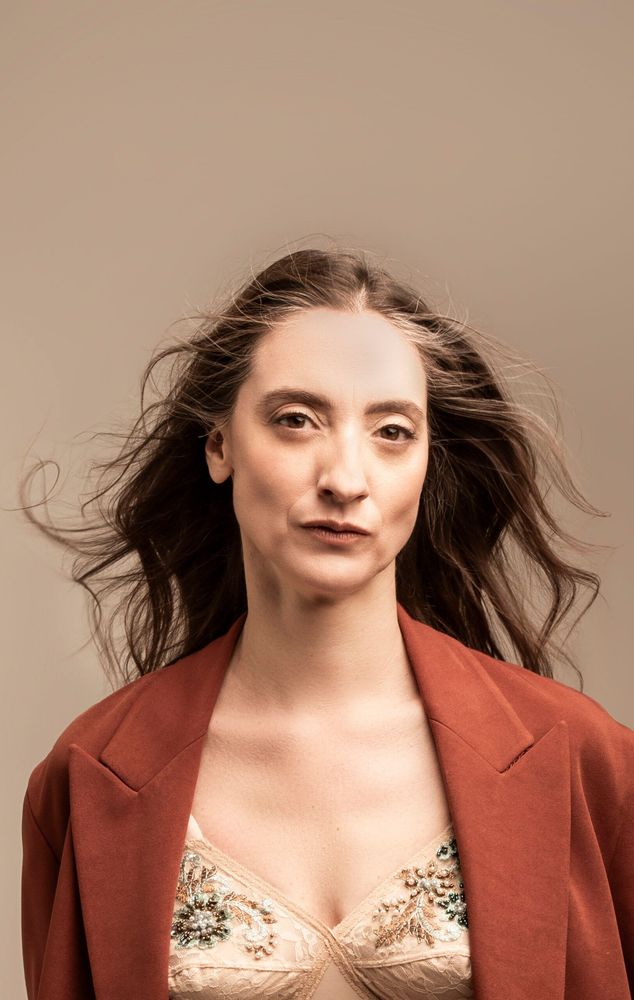
Anna Della Rosa in “Diario di Eva,” by Dario Fo and Franca Rame, produced by Casa del Contemporaneo in collaboration with Stanze – teatro fuori dai teatri Director’s notes: Since a woman is dialogue, Paradise for her means being able to engage in this dialogue with another. (Carla Lonzi, Vai pure. Dialogo con Pietro Consagra) Several years ago, I was looking for a passage to study for the auditions I had coming up and found this enchanting text. It features various characters, but the protagonist—who has many hilarious monologues—is Eva. I chose one in particular and, with some careful cutting and pasting, crafted a piece lasting about ten minutes. Ever since then, however, I’ve longed to perform a recitation—and here and there a song—of the entire “tapestry,” giving voice to all the characters in accordance with the great lesson of Fo and Rame. At the heart of the story is she, the Prima Donna, who, in recounting her life, evokes and brings to life Adam, Cain and Abel, the Angel, and God. Eve is the source of a profound, joyful, and vital wisdom in contrast to a crude and unremarkable Adam; she is the one who invents language, names animals and flowers, and, with wonder and respect, discovers nature, the other, love, and pain. Fo, as he recounts in his introduction to the play, reads The Diary of Eve by Mark Twain and is inspired to rewrite the entire story as a grand madrigal. Imagine that Eve, now nearly fifty and thus long since expelled from the Garden of Eden, finds the diary she had written shortly after being “born” and reads it to us. Her story is a brilliant portrait, imbued with tenderness and intelligence, that highlights “the superiority of women” (Dario Fo, Eve’s Diary, introduction). Using poetic language inspired by a colorful dialect from central Italy, Fo continues, “Eve explains her life to us and her relationship with that dimwit Adam, to whom she gave her knowledge and wisdom; she loved him so much that she led him to believe he was the true genius. Adam would transform her feminine knowledge into masculine power, with the consequences we all know.” Through the extreme simplicity of the staging—one body, one voice, one lectern—I wish to bring this fable to life through the power of the bare word, which, with all the delight of Fo and Rame’s candid and refined comedy, allows us to savor anew Love and the thirst for knowledge through Eve’s eyes. Two very witty songs from Mina’s lesser-known repertoire, sung a cappella, amplify and illuminate the grace of the text.
Cover
View detailsContacts
Telefono: +39 370 368 5093